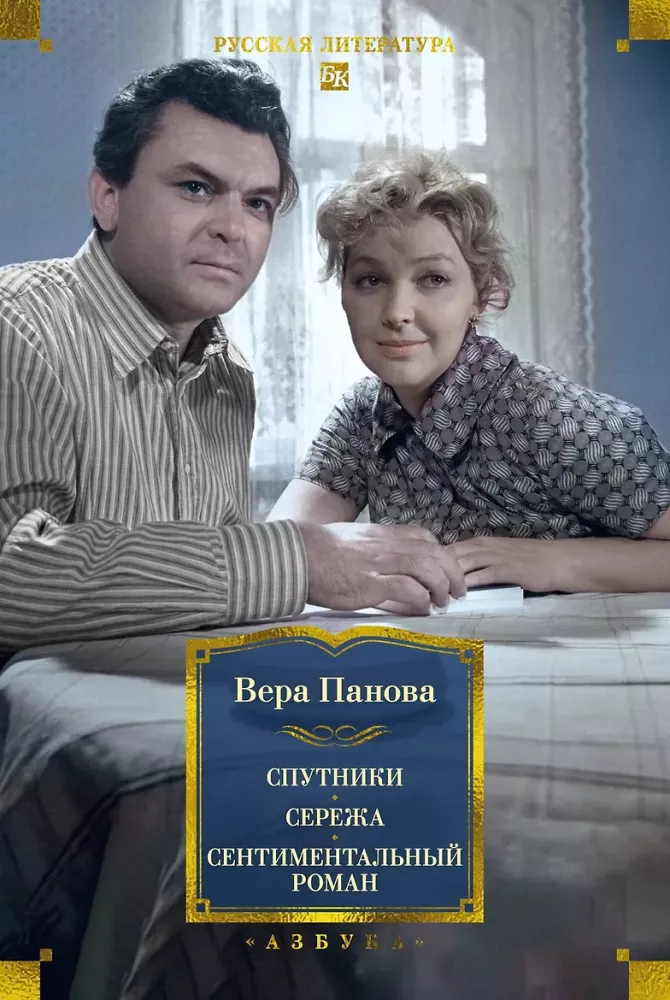
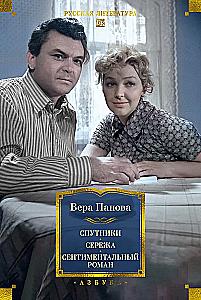
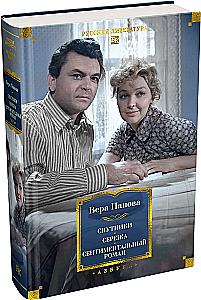
Спутники. Сережа. Сентиментальный роман
Autorius: Vera Panova
Publisher: Azbuka
Serija: Russian Literature. Big Books
Amžiaus ribos: 16+
Išleidimo metai: 2026
ISBN: 9785389334533
Puslapių skaičius: 800
Dydis: 210h140h38 mm
Viršelio tipas: Hard
Svoris: 898 g
ID: 1747370
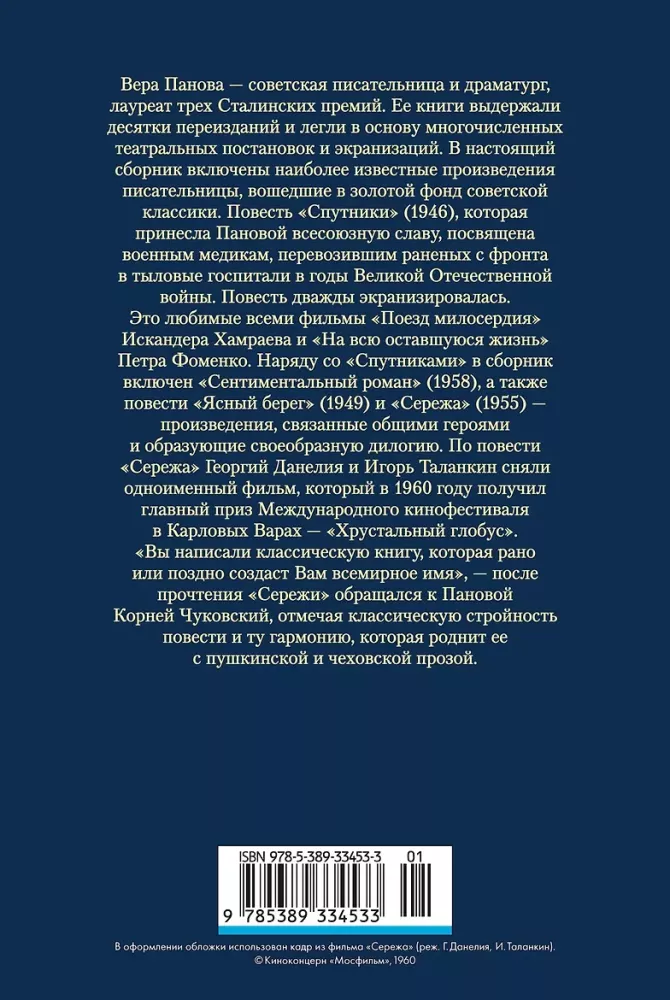
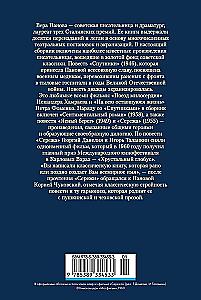
The collection of works by Vera Panova unites hallmark texts that have firmly entered the golden fund of Soviet literature. The central work is the novella "Satellites" (1946) — a piece that brought the writer nationwide fame. At the heart of the narrative are the fates of military medics: during the Great Patriotic War, they transported the wounded from the front to rear hospitals, daily facing severe trials and demonstrating true heroism. The theme of mercy, duty, and humanity in extreme conditions made "Satellites" one of the most poignant texts about the war. Later, based on the novella, a cult multi-part film "For the Rest of Their Lives" was made (directed by Pyotr Fomenko), with a script created by Boris Vakhtin, the son of Vera Panova.
The collection also includes "A Sentimental Novel" (1958) — a vivid work that reveals the subtleties of human relationships and the atmosphere of the era. The publication is complemented by the novellas "Clear Shore" (1949) and "Seryozha" (1955). These texts are connected by common characters and essentially form a kind of dilogy that allows for tracking the development of characters and seeing a panorama of post-war life.
Particular attention is deserved by the novella "Seryozha": it was the one that received high praise from contemporaries and reinforced Panova's reputation as a master of psychological prose. Based on this work, Georgiy Daneliya and Igor Talankin made a feature film, which in 1960 was awarded the "Crystal Globe" — the main prize of the International Film Festival in Karlovy Vary. The high artistic value of "Seryozha" was also noted by Korney Chukovsky: he emphasized the classic elegance and harmony of the novella, highlighting the rare proportionality of its parts and the subordination of all images to a single artistic whole — a quality that connects Panova's prose with the traditions of Pushkin and Chekhov.